Key Takeaways:
- Choose a production partner that understands the business problem, audience, and desired outcome behind the video.
- Strategy should come before production, with the purpose and viewer action defined early.
- Look for storytellers who can turn complex business material into a clear narrative and help people sound authentic on camera.
- A reliable stakeholder and approval process is essential when marketing, legal, HR, and brand teams all provide feedback.
- Plan for distribution and multiple versions from the beginning, so a single production can support several channels.
Choosing a corporate video production company can feel oddly personal.
On paper, you’re hiring a team to handle cameras, lighting, editing, and the practical pieces that turn an idea into a finished video. But the real question is simpler: can they understand what your organization is trying to say, and help you say it in a way people will watch?
A strong corporate video production company helps you figure out what needs to be said, who needs to hear it, and how the finished video will be used across the business.
Because one video often needs to support marketing, sales, HR, leadership, internal communications, recruiting, and customer education, your production partner needs to understand the full picture before creative direction is set.
Here’s what to look for when evaluating a corporate video production company.
Quick Checklist: What to Look for in a Corporate Video Production Company
A good corporate video production partner should offer:
- Discovery before creative development
- Experience with corporate audiences and approval processes
- A practical corporate video production process
- Story development and interview direction
- Project management for stakeholders, brand review, and legal input
- Production and post-production expertise
- Transparent pricing and deliverables
- Versioning for sales, marketing, recruiting, internal communications, and events
- Guidance on distribution across web, social, email, paid media, and internal channels
A strong portfolio is useful. But the better question is whether the company can understand your business challenge, not only show polished finished work.
Choose Storytellers Who Understand Business Audiences
Production quality matters. Poor audio, awkward lighting, and clunky editing can distract from the message.
Still, corporate video production is more than technical execution.
You want a team that knows how to find a story inside business material. That story might come from a founder explaining the company’s direction, a customer describing what changed after using your product, an employee talking about culture, or a subject matter expert making a complex idea easier to follow.
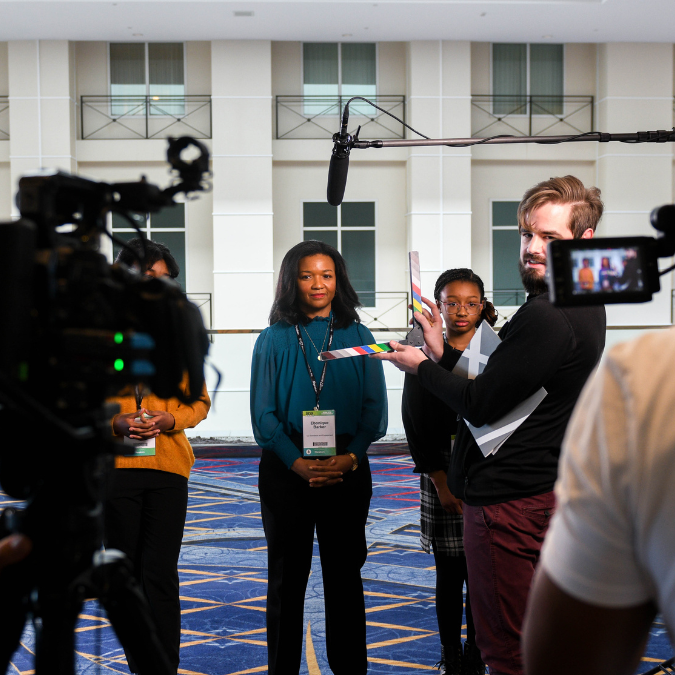
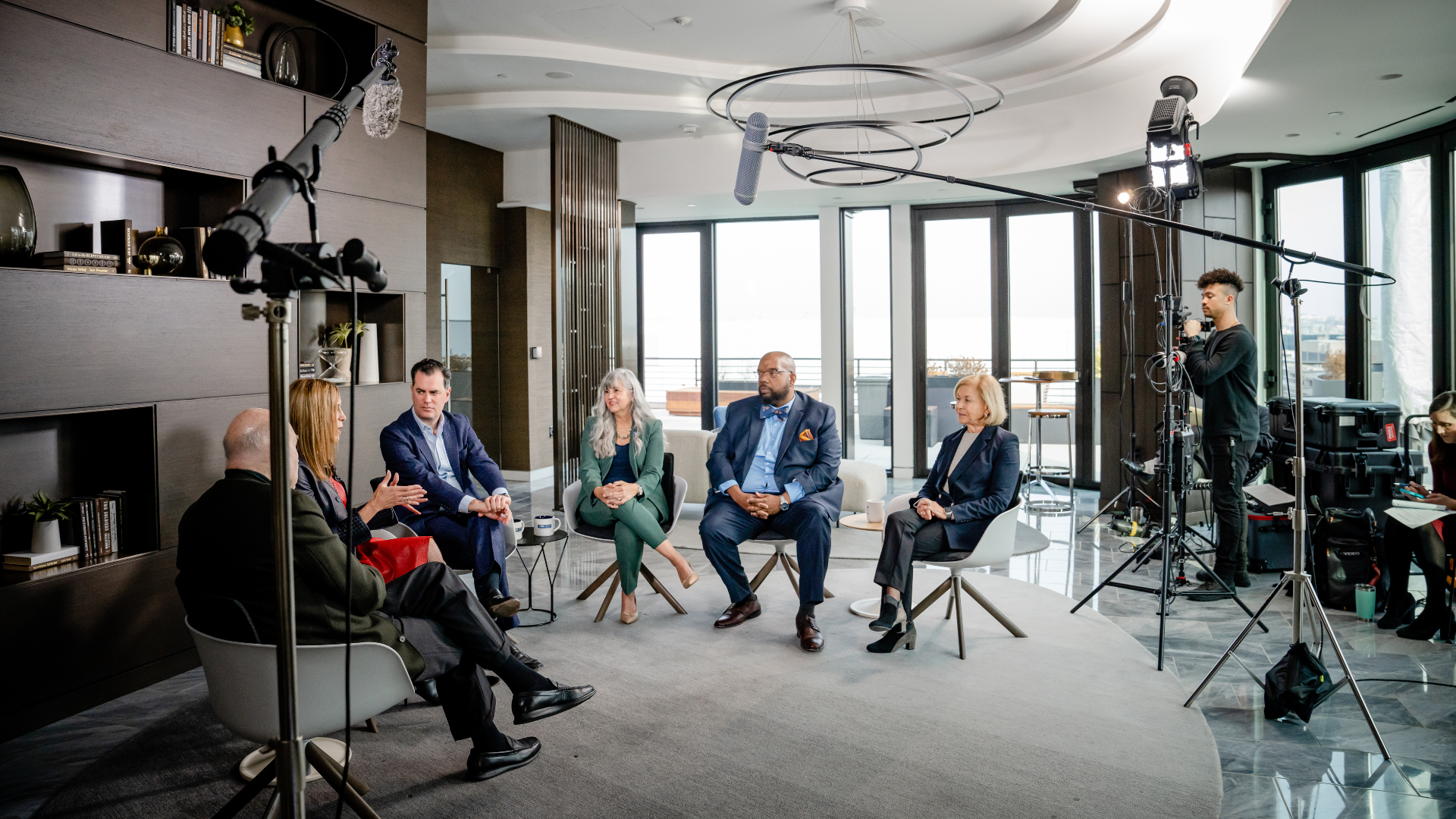
In a recent DEI project, the approach focused on firsthand employee stories rather than leadership talking points.

Experienced storytellers help real people, especially executives, sound like themselves on camera instead of defaulting to approved talking points. They know how to shape business video content without flattening every answer into a brand statement.
Start with Strategy Before Production
A polished video can still miss the point.
Before anyone talks about locations, crew size, or music, your production partner should understand why the video needs to exist. A brand video, sales enablement video, and internal communications video each need a different approach because each asks the audience to do something different.
A strong corporate video strategy should answer a few questions early:
- Who is the audience?
- What do they already believe?
- What should they understand or do after watching?
- Where will the video be used?
- Which teams need versions of the final asset?
For larger campaigns focused on shifting a narrative or driving large-scale behavior change, the right creative starts by understanding what audiences already believe and care about. In some cases, that means bringing in a strategic communications or research partner to inform the creative direction.
Ask How They Manage Stakeholders and Approvals
Corporate video projects usually involve more than one decision-maker.
Marketing may own the project. Sales may need the final asset. HR may have input on tone. Legal may review claims. Executives may care about positioning. Brand teams may need consistency across visual identity, language, and usage.
What matters is how the production team handles all of that. Who gathers feedback? How are notes combined? How many review rounds are built in? When do legal or brand reviews happen?
These details can decide whether the project stays useful or turns into a compromise no one is excited to use.

Review Work That Matches Your Business Challenge
A reel can show taste. Case studies show judgment.
Look for work that matches the kind of challenge you’re dealing with. Technical topics should feel easy to follow. Executive interviews should sound natural. Sales-focused videos should turn customer experience into something credible, not a pitch. If HR is involved, review recruitment videos or employee stories. For internal communications, look for work that handles change and culture in a way employees can trust.
The industry does not have to match perfectly. But the production company should be able to show that they can translate business complexity into something people can follow.
Plan for Editing, Versioning, and Distribution
For corporate teams, post-production often includes versioning. One shoot might become a homepage brand video, LinkedIn cut, sales enablement clip, recruiting edit, internal communications version, customer quote pull, product explainer, event opener, or paid digital ad.
If the video is outward-facing, digital advertising should be part of the strategy from the beginning. Paid social, YouTube pre-roll, display, and connected TV often need shorter cuts, faster openings, captions, strong thumbnails, and messaging that lands before someone scrolls or skips. Planning for those placements early helps your team capture the right footage, build smarter cutdowns, and get more value from the production investment.

Look for Clear Pricing and Defined Deliverables
Corporate video production costs vary because every project has different needs.
A CEO message filmed in one office is different from a multi-location recruitment campaign. A simple customer interview is different from a product video with motion graphics, multiple cutdowns, and paid media versions.
A useful proposal should explain strategy, scripting, crew size, shoot days, locations, editing, motion graphics, music licensing, captioning, review rounds, final video deliverables, and alternate versions.
The budget conversation should make the tradeoffs clear. You might choose a simpler shoot with a sharper idea, or put more into versioning so the video works across teams. A good proposal lays those options out so you can decide what matters most.
Watch for Red Flags
A production company can deliver a polished video and still be the wrong fit.
Watch for:
- Vague pricing
- No discovery process
- Weak or overly scripted interviews
- Little interest in how the video will be used
- Ideas before they understand your audience
For corporate projects, also look for gaps around approvals, brand guidelines, and how different teams will use the final video.
If the company can’t get to what makes your message worth hearing, the video may look good and still fall flat.
Choosing the Right Corporate Video Production Partner
A strong corporate video production company should make the project easier to shape, easier to manage, and easier to use once the final files are delivered.
For corporate teams, that matters. The video may live on a homepage, support a sales conversation, open an event, explain a change internally, or help recruiting teams show the company’s culture.
LAI Video helps companies turn complex ideas into human-centered video content. From strategy and scripting to production, editing, and campaign support, our team builds videos for the places your audience will see them.
Contact us to talk through your next corporate video project.